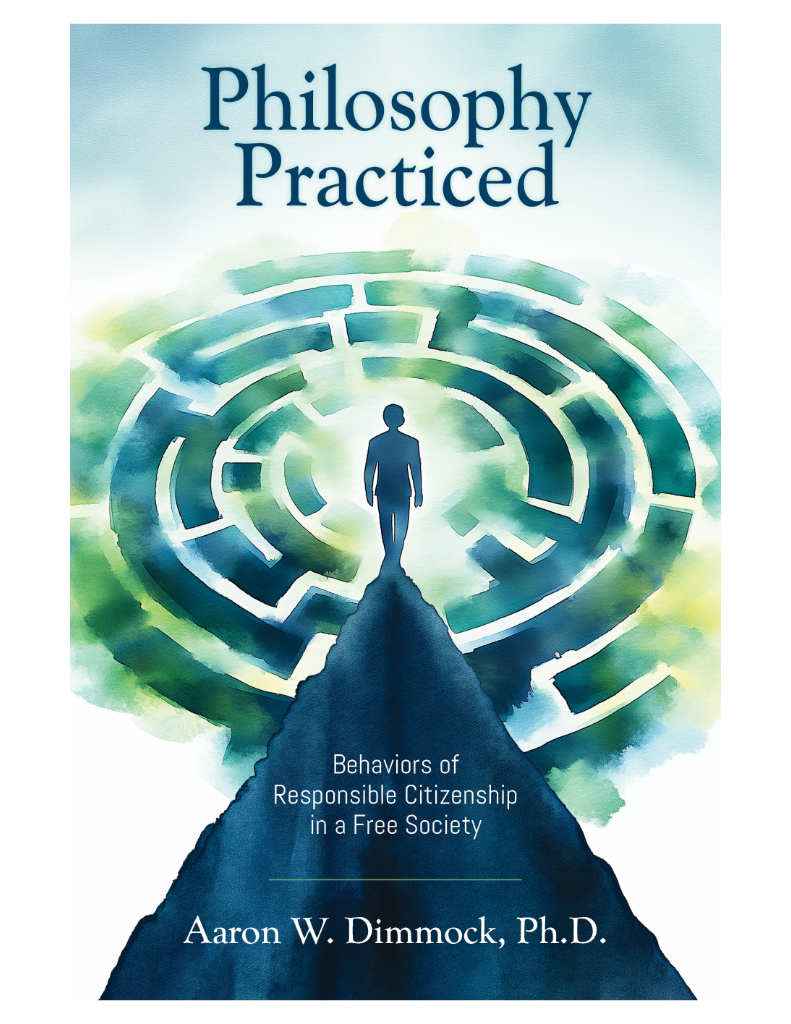
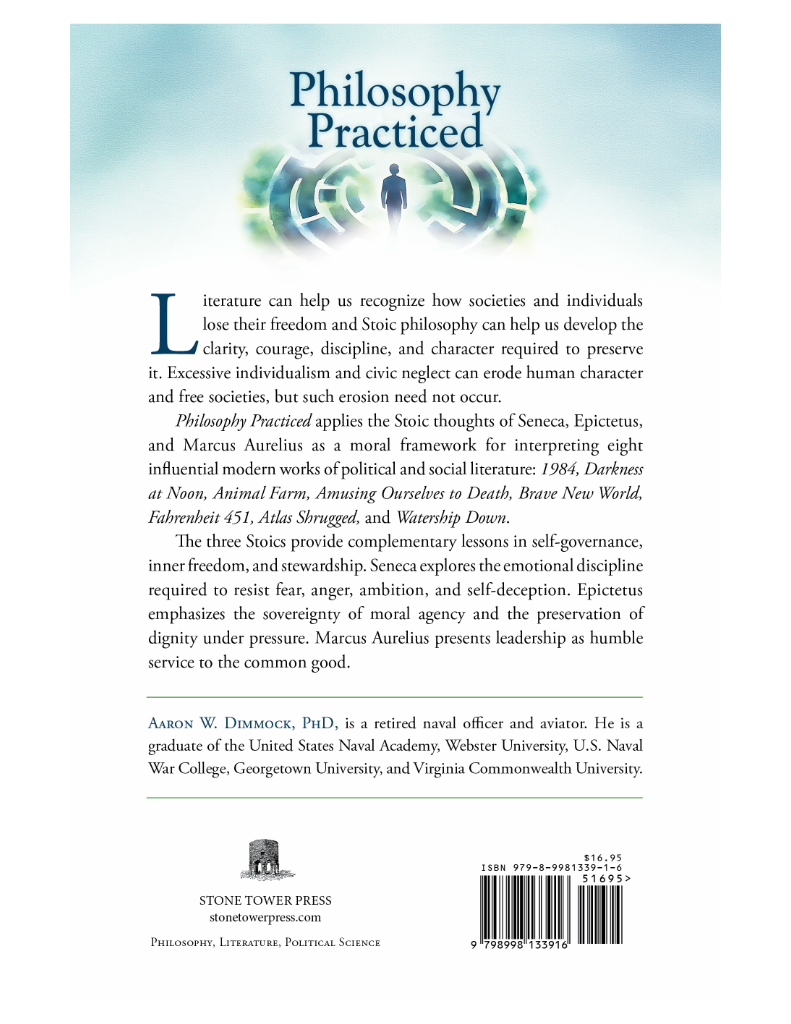
Literature can help us recognize how societies and individuals lose their freedom and Stoic philosophy can help us develop the clarity, courage, discipline, and character required to preserve it. Excessive individualism and civic neglect can erode human character and free societies, but such erosion need not occur.
Philosophy Practiced applies the Stoic thoughts of Seneca, Epictetus, and Marcus Aurelius as a moral framework for interpreting eight influential modern works of political and social literature: 1984, Darkness at Noon, Animal Farm, Amusing Ourselves to Death, Brave New World, Fahrenheit 451, Atlas Shrugged, and Watership Down.
The three Stoics provide complementary lessons in self-governance, inner freedom, and stewardship. Seneca explores the emotional discipline required to resist fear, anger, ambition, and self-deception. Epictetus emphasizes the sovereignty of moral agency and the preservation of dignity under pressure. Marcus Aurelius presents leadership as humble service to the common good.
About the Author:
Aaron W. Dimmock, PhD, is a retired naval officer and aviator. He is a graduate of the United States Naval Academy, Webster University, U.S. Naval War College, Georgetown University, and Virginia Commonwealth University.


